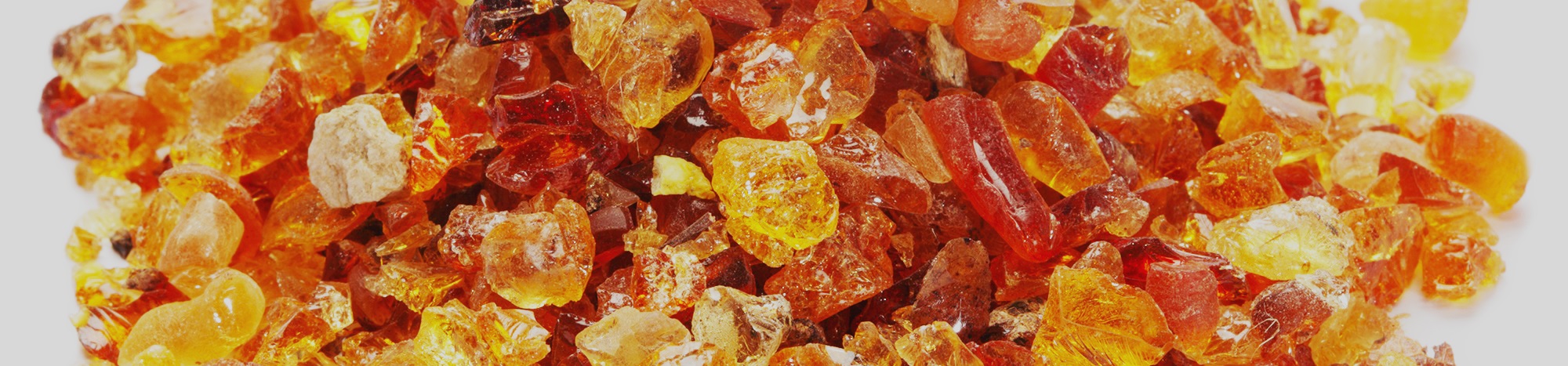
Gum Arabic
Gum Arabic — also known as acacia gum, chaar gund or meska — is the most commercially popular of the food gums, consisting of the hardened sap of wild Acacia trees and collected through drilling, hole incisions or natural exudation. Commercial grades are now predominantly collected from the Acacia senegal and Acacia seyal species endemic to the Sahel region of Sub-Saharan Africa. Traditionally, the best-quality gum has been associated with the Kordofan province of Sudan, which produces close to 80% of the world's supply, with further commercial production in Nigeria, Mali, Senegal and, more recently, Chad.
First used in Ancient Egypt as an adhesive and an ink, the product later reached Europe and earned the name "Gum Arabic" because it was exported from Arabian ports. Today its unique properties see it applied across food, textiles, ceramics, cosmetics and pharmaceuticals — acting as a stabiliser, thickener and emulsifying agent, and used in drug encapsulation.